
by David Schlesinger | 8 Jul 2026 | Africa, China, Decoder Replay, Health and Wellness, History, Politics
When a nation provides international aid for medical supplies and doctors, it can gain allies around the world. Refusing aid builds resentment.
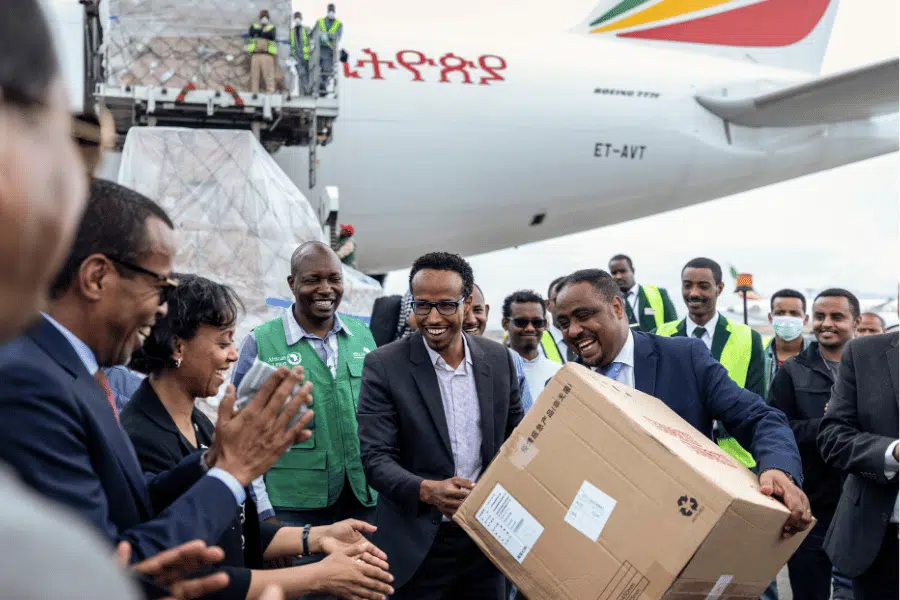
In Ethiopia, politician Shumete Gizaw hands over a box of medical supplies to Minister of Health Lia Tadesse, part of a supply of Covid-19 prevention and treatment supplies from China to be distributed to countries throughout Africa, 22 March 2020. (AP Photo/Mulugeta Ayene)
Editor’s note: On 18 June 2026, the U.S. government announced it would end assistance to South Africa for the prevention and treatment of HIV and AIDS. Meanwhile, a new program to provide health assistance throughout Africa has been met with resistance from some countries, particularly Zambia and Ghana, because the Trump administration has tied some of it to the purchasing of pharmaceuticals and medical services from U.S. companies. Zambia has also objected to conditions that would tie the aid to mineral extraction contracts for U.S. mining companies.
Medical aid is a form of “soft “power”—ways that powerful nations create a reputation for world leadership and gain international allies. While the United States has reduced and restricted its aid, China has done the opposite. As a result, a Gallup News poll recently showed how China’s image in many African nations has increased while that of the United States has decreased.
To help understand the importance of soft power, we republish a story by author David Schlesinger, first published in April 2020 at the onset of the Covid-19 pandemic, that explored how China used the soft power of medical aid to Italy as a response to the blame it was receiving as the initial spreader of Covid-19.
We launched Decoder Replay to help readers better understand current world events by seeing how our correspondents decoded similar events in the past.